

For decades, African football was judged through a lens that no other continent had to endure. When European teams won, it was because of structure. When South American teams triumphed, it was because of culture. When African teams succeeded, it was often explained away as passion, pace, or physicality. Yet as the 2026 World Cup begins, the evidence points to a different reality: African football’s rise is no longer being driven by athleticism. It is being driven by ideas.
Africa arrived at the World Cup asking whether it belonged. In 2026, the question is different. After Morocco’s historic run in Qatar and with a record number of representatives, Africa is no longer seeking acceptance among football’s elite—it is trying to become part of them. African football was described with the same vocabulary; powerful, athletic, unpredictable, emotional. European and South American teams were praised for systems; African teams were praised for raw talent. Yet as the 2026 World Cup unfolds, that description feels increasingly outdated. The continent’s biggest weapon is no longer athleticism. It is organization.
For years African teams have been described as physically superior and tactically inconsistent. Even when African teams create memorable World Cup moments, it’s often seen as stories of passion than structure. Examples are the Cameroon 1990, Nigeria 1994, Senegal 2002, and Ghana 2010. The narrative has always been talented enough to beat anyone, disciplined enough to lose to anyone. The stereotype has always been a lazy football analysis whenever African teams fell short.
African football problem was rarely talent but many factors that could be considered as structural. Over the years, African teams have faced various difficulties in their structure and that certainly has contributed to their lack of success in the World’s biggest stage. Federation instability, coaching turnover, poor preparation cycles, administrative crises, short training camps, to mention but a few. These factors have been a huge stumbling block to the success of African teams at the World Cup. A number of this challenges can be traced down to corruption one way or another. In comparison to the European teams who enjoy stable federations, long term coaching projects, advanced player development systems. The issue has always been structural than intellectual.
Many years ago, African stars went through the grassroot local system process before moving abroad. But for today’s generation, it’s quite different. A large portion of African national team players are developed at La Masia, Cobham, Carrington, Clairefontaine, Premier League Academies, and Bundesliga academies. As a result, the talent has developed over time and African footballers now arrive with positional discipline, tactical discipline, tactical versatility. Modern African players aren’t mere athletes who learned tactics later but are tactical products from the beginning.
Morocco’s Qatar 2022 run was just revolutionary because they reached the semis but because of how they did it. The old stereotype of African teams succeeding through chaos changed because Morocco did theirs with control. Their principles were quite clear; compact defensive low lock, coordinated pressing, verticality, set piece organization, exceptional spacing. They defeated strong opponents like Spain, Portugal not by running faster but by thinking faster. For the first time, an African team became a global tactical case study. Coaches across the world began analyzing Morocco’s defensive structure the same way they had previously analyzed Spain or Germany. That was a significant cultural shift.
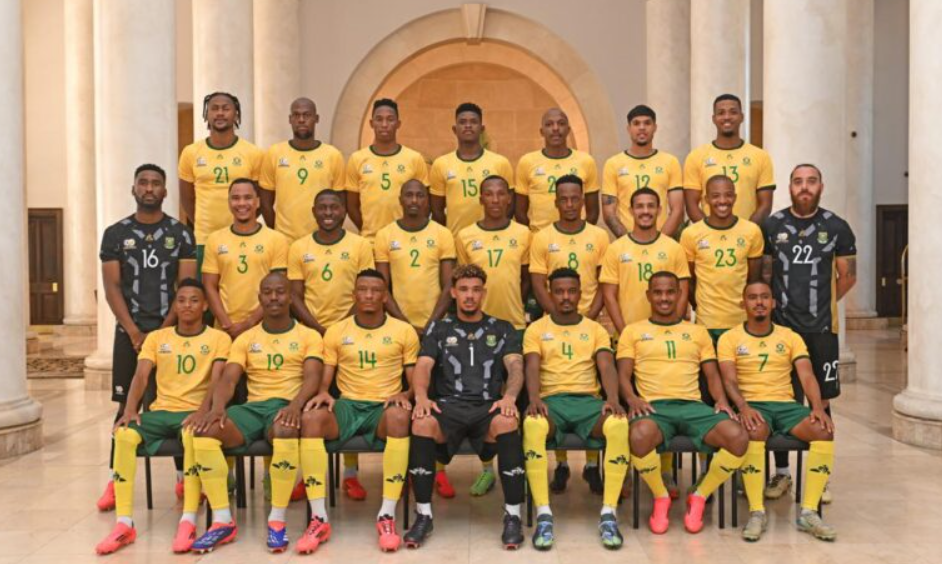
African football today is largely defined by tactical flexibility from teams like Morocco, Senegal, Cape Verde, Egypt, Ivory Coast etc. Now teams can play a high press, mid-block, low-block, heavy possession or direct transition as situations change over time. The emphasis has shifted from individual brilliance to collective execution like we’ve seen in games featuring African teams in this World Cup; Morocco against Brazil, Ivory Coast against Ecuador, Cape Verde against the European Champions, Spain and Egypt against Belgium.
The World Cup serves as the ultimate test. One Morocco run can be dismissed as exceptional. Many African countries having developed themselves with tactical maturity over the years should be able to replicate or aim for larger success like Morocco did. The question is no longer “Can African teams compete physically?” but “Can African teams consistently tactically compete against European and South American elites into a deep World Cup run?”.
Having focused this piece more on Africa’s tactical maturity over the years, there are administrative challenges that need addressing. Though the African tactical revolution is real, it still remains vulnerable to; federation instability, frequent coaching changes, short term planning, limited domestic infrastructure, and administrative interference. The football has modernized faster than some of the institutions that govern it. That tension remains one of the continent’s biggest obstacles.
Africa’s World Cup story is no longer about catching up. In many respects, the continent has already caught up. Its players populate Europe’s elite clubs, its coaches are increasingly sophisticated, and its teams are more organized than ever before. The challenge now is consistency. If Qatar 2022 was the moment Africa announced its tactical maturity, World Cup 2026 may reveal whether that transformation has become the continent’s new normal.